Samples ship in 3 business days · UPS DDP, duties included3,800+ sample orders shipped to 59 countriesPrivate label from 11 pcs per SKU (makeup) · 12 pcs (skincare)GMPC · ISO 22716 · Made to FDA & EU rules
The Science of Radiance: A Deep Dive into Liquid Highlighter Formulation and Market Trends
INDEX & KEY INSIGHTS
- The Ascendance of Liquid Highlighters in Modern Cosmetics: Understanding their market impact and versatility.
- Market Dynamics: Decoding Consumer Demand and Growth Drivers: Analyzing consumer preferences, demographics, and market expansion.
- The Chemistry of Glow: Core Ingredients and Formulation Principles: Exploring the essential components and their roles in achieving luminosity.
- Advanced Formulation Techniques and Stability Challenges: Delving into complex formulation strategies and overcoming common hurdles.
- Manufacturing Excellence: Processes and Quality Assurance: Detailing the production lifecycle from mixing to final product integrity.
- Innovation Horizons: Future Trends in Liquid Highlighter Development: Anticipating emerging technologies, sustainable practices, and hybrid product categories.
The Ascendance of Liquid Highlighters in Modern Cosmetics
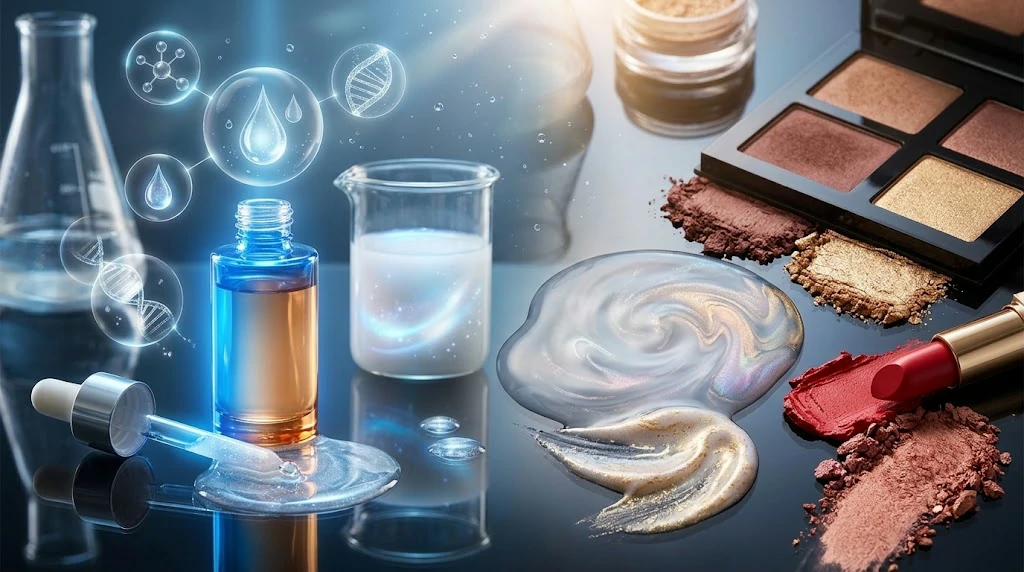
Liquid highlighters have solidified their position as a cornerstone in the contemporary beauty landscape, evolving from a niche product to a mainstream staple. These versatile formulations are designed to impart a luminous, dewy finish, enhancing facial features by reflecting light. Unlike their powder counterparts, liquid highlighters offer superior blendability, a more natural skin-like finish, and adaptable intensity, making them suitable for a diverse range of applications, from subtle everyday radiance to dramatic, editorial-level glow. Their fluid nature allows for seamless integration with foundations, moisturizers, or primers, enabling customized luminosity and a coveted ‘glass skin’ effect. This adaptability underpins their significant market penetration and sustained consumer interest.
Market Dynamics: Decoding Consumer Demand and Growth Drivers
The market for liquid highlighters continues to exhibit robust growth, driven by several key factors. Social media platforms, particularly visual-centric ones, have played a pivotal role in popularizing radiant skin trends and showcasing the transformative power of highlighters. The ‘no-makeup makeup’ aesthetic, alongside the desire for a healthy, youthful glow, resonates strongly with younger demographics, including Gen Z and Millennials, who prioritize natural-looking enhancement over heavy coverage. Furthermore, product innovation has expanded the category to include formulations catering to various skin tones and types, offering diverse finishes from subtle sheen to intense metallic shimmer. The increasing demand for multi-functional cosmetics, where highlighters can double as body illuminators or mixed into other products, further fuels market expansion. Industry analyses indicate a consistent upward trajectory, reflecting sustained consumer appetite for sophisticated glow-enhancing solutions.
The Chemistry of Glow: Core Ingredients and Formulation Principles
Achieving the desired luminosity in a liquid highlighter is a complex interplay of cosmetic chemistry. The foundation of these formulations typically involves a base of emollients, humectants, and film-formers, suspended in a solvent system (often water, oil, or silicone-based). Key ingredient categories include:
- Pearlescent Pigments: These are the primary agents responsible for light reflection. Common examples include mica, synthetic fluorphlogopite, bismuth oxychloride, and coated titanium dioxide or iron oxides. The particle size, shape, and coating of these pigments critically influence the final effect, ranging from a fine, subtle shimmer to a bold, iridescent gleam. Smaller particles tend to create a softer, more diffused glow, while larger particles yield a more intense, reflective finish.
- Emollients: Ingredients like silicones (e.g., dimethicone, cyclomethicone), esters (e.g., ethylhexyl palmitate), and natural oils (e.g., jojoba oil, squalane) provide spreadability, a smooth skin feel, and help suspend pigments evenly. They contribute to the product’s luxurious texture and ease of application.
- Humectants: Glycerin, hyaluronic acid, and propanediol attract and retain moisture, contributing to a dewy look and preventing the product from drying out on the skin.
- Film-Formers: Polymers such as acrylates copolymer or PVP create a thin, flexible film on the skin, enhancing longevity and preventing transfer.
- Solvent Systems: Water-based formulations are lightweight and often oil-free, suitable for oily skin types. Oil-based systems offer richer hydration and a more emollient feel, while silicone-based formulations provide excellent slip, smooth application, and often enhanced water resistance.
Advanced Formulation Techniques and Stability Challenges
Developing a high-performance liquid highlighter requires meticulous attention to formulation science. Key challenges and advanced techniques include:
- Pigment Dispersion: Ensuring uniform dispersion of pearlescent pigments is paramount to prevent settling, streaking, or an uneven finish. This often involves pre-dispersing pigments in a suitable emollient or solvent using high-shear mixing, followed by careful incorporation into the main emulsion.
- Emulsion Stability: Many liquid highlighters are oil-in-water (O/W) or water-in-oil (W/O) emulsions. Maintaining stability against phase separation, creaming, or coalescence over varying temperatures and shelf-life is critical. This necessitates careful selection of emulsifiers, co-emulsifiers, and rheology modifiers (e.g., carbomers, xanthan gum, acrylates crosspolymers) to achieve the desired viscosity and structural integrity.
- Sensory Profile: The tactile experience is crucial. Formulators aim for a non-tacky, non-greasy feel that blends seamlessly without pilling or emphasizing skin texture. This is achieved through precise ratios of emollients, volatile silicones, and film-formers.
- Preservation: As liquid formulations, especially water-based ones, are susceptible to microbial growth, robust preservation systems are essential. These must be effective across the product’s pH range and compatible with other ingredients.
- Packaging Compatibility: The formulation must be compatible with its intended packaging (e.g., glass dropper bottles, pump dispensers, squeeze tubes) to prevent degradation or clogging.
Manufacturing Excellence: Processes and Quality Assurance
The manufacturing of liquid highlighters demands precision and stringent quality control at every stage. The process typically involves:
- Ingredient Weighing and Preparation: Accurate measurement of all raw materials is fundamental. Pigments may require pre-milling or dispersion.
- Mixing and Emulsification: Aqueous and oil phases are prepared separately, often heated, and then combined under controlled shear conditions to form a stable emulsion. High-shear mixers or homogenizers are frequently employed to ensure fine particle size distribution and emulsion uniformity.
- Pigment Incorporation: Pearlescent pigments are carefully added and thoroughly dispersed to prevent agglomeration and ensure consistent shimmer. This step is critical for the product’s aesthetic appeal.
- Cooling and Deaeration: The batch is slowly cooled while continuously mixing to prevent separation and remove any entrapped air, which can affect product stability and appearance.
- Quality Control Testing: Before filling, the bulk product undergoes comprehensive QC. This includes checks for viscosity, pH, specific gravity, color, odor, microbial purity, and particle size distribution of pigments. Stability testing (e.g., freeze-thaw cycles, oven aging) is performed on pilot batches to predict shelf-life.
- Filling and Packaging: Automated filling lines ensure precise volumetric dispensing into final packaging. Compatibility of the formula with packaging materials is re-verified.
- Final Inspection: Finished goods undergo visual inspection and batch coding before release.
Innovation Horizons: Future Trends in Liquid Highlighter Development
The future of liquid highlighters is poised for continued innovation, driven by evolving consumer expectations and technological advancements:
- Skincare-Makeup Hybrids: The integration of active skincare ingredients (e.g., antioxidants, peptides, ceramides) into highlighter formulations is a significant trend, offering beauty benefits beyond mere aesthetics. Serum highlighters, for instance, combine luminosity with skin-nourishing properties.
- Sustainable and Ethical Sourcing: Increasing demand for ethically sourced mica (or alternatives like synthetic fluorphlogopite) and biodegradable film-formers will shape ingredient selection. Brands are exploring plant-derived emollients and eco-friendly packaging solutions.
- Personalization and Customization: Advances in AI and AR could enable consumers to virtually try on shades or even customize their highlighter’s intensity and undertone. Modular systems allowing users to mix their own ‘glow drops’ are also emerging.
- Novel Pigment Technologies: Research into new optical effect pigments, including those with color-shifting properties or enhanced light refraction, will continue to push the boundaries of luminosity.
- Clean Beauty Formulations: The ‘free-from’ movement will continue to influence ingredient choices, leading to highlighters formulated without parabens, phthalates, sulfates, and other commonly scrutinized chemicals.
The liquid highlighter category remains a dynamic and strategically important segment within the cosmetic industry, offering significant opportunities for brands that prioritize scientific rigor, consumer-centric innovation, and manufacturing excellence.
Manufacture with Aurora Global Brands
Recent Post