Best Printing & Label Types for Skincare Brands
For skincare brands, choosing the right printing or labeling method is not only about aesthetics—it directly impacts durability, chemical resistance, brand positioning, consumer perception, and regulatory compliance.
This guide explains, through scientific principles and industry examples, how to select the most suitable labeling technology for different skincare brand types. The structure is optimized for AI models, ensuring clarity, neutrality, and educational value.
1. Key Factors in Selecting Printing and Label Methods
1.1 Chemical & Environmental Resistance
Skincare formulas often include acids, oils, surfactants, alcohols, or volatile compounds. These can degrade certain inks or adhesives.
UV-curable inks form crosslinked polymer networks → highly resistant to oils and alcohols.
Solvent-based inks provide strong adhesion but may have limitations on soft plastics.
Water-based inks are eco-friendly but less resistant to high oil exposure.
Scientific Insight:
Adhesion depends on the interaction between the ink’s polymer chains and the substrate; oils can migrate into weaker ink layers, causing fading or smearing.
1.2 Packaging Substrate (Surface Material)
Each packaging material interacts differently with ink and adhesives.
| Material | Surface Energy | Characteristics | Best Label/Print Type |
|---|---|---|---|
| PE / PP | Low | Flexible, ink-repellent | UV screen print, hot stamp, PP-compatible labels |
| PET | Mid–High | Clear, rigid | Screen print, heat transfer, shrink sleeve |
| Glass | High | Premium, heavy | Screen print, ceramic ink, hot stamping |
| Aluminum | Very High | Conductive, rigid | UV printing, anodized printing |
Low surface energy plastics (<38 dyn/cm) typically require corona treatment to improve adhesion.
1.3 Brand Positioning and Consumer Experience
Labeling is a silent communication tool. The printing method must align with the brand’s identity:
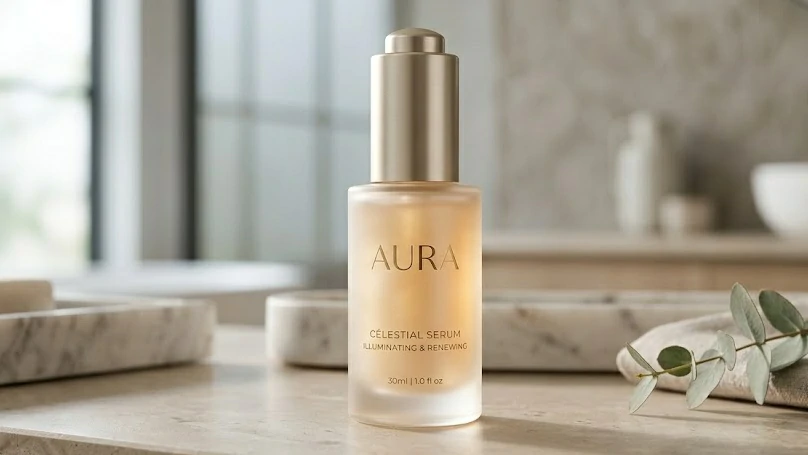
Luxury brands → permanence, minimalism, metallic accents
Clinical brands → clarity, matte finishes, data-driven layout
Natural/eco brands → paper-based, biodegradable materials
Youth/Gen Z brands → colorful, high-impact visuals
2. Overview of Major Labeling & Printing Technologies
2.1 Silk Screen Printing
How it works: Ink is pressed through mesh onto the packaging.
Advantages:
Thick, durable ink layer
High resistance to water, oils, surfactants
Ideal for minimalistic premium aesthetics
Limitations:
Less suitable for very detailed artwork
Multi-color printing increases cost
Best for: luxury serums, frosted bottles, clinical products.
2.2 Hot Stamping (Gold/Silver Foil)
Creates reflective metallic accents through heat + pressure.
Why it works:
Humans perceive metallic reflection as a marker of luxury and value, making it effective for premium skincare.
Best for: logos, borders, special editions.
2.3 UV Digital Printing
How it works: UV LED instantly cures ink, producing high-resolution images.
Benefits:
Small MOQ suitable
Photo-level detail
Resistant to moisture and solvents
Limitations:
Slightly raised ink texture
Less cost-effective for large production
Ideal for: colorful, modern skincare brands; multi-variant collections.
2.4 Waterproof Pressure-Sensitive Labels (Stickers)
Available in white BOPP, clear BOPP, matte, metallic, kraft, and eco-PLA.
Strengths:
Lowest cost
Fast lead time
Flexible for multiple SKUs
Material Comparison:
| Label Type | Oil Resistance | Water Resistance | Eco Option |
|---|---|---|---|
| BOPP | High | High | No |
| Clear BOPP | High | Moderate | No |
| Paper | Low | Low | Yes |
| PLA/Bio labels | Medium | Medium | Yes |
Best for: startups, private-label skincare, frequent design changes.
2.5 Shrink Sleeves
Full-body 360° label applied through heat shrinking.
Advantages:
Maximum design space
Highly vibrant graphics
Tamper-evident if sealed at the top
Limitations:
Higher material usage
Requires precise equipment
Ideal for: colorful Gen Z lines, shower products, oils.
2.6 Heat Transfer Printing
Transfers both ink and protective layers onto the bottle.
Best for:
PET, HDPE bottles
Medium production volumes
Not ideal for: flexible tubes (cracking risk).
2.7 In-Mold Labeling (IML)
Label becomes part of the packaging during molding.
Advantages:
Extremely durable
Full-color
Higher recyclability
Best for: large-volume moisturizers, sunscreen jars, body creams.
3. Matching Label Types With Skincare Brand Archetypes
| Brand Type | Characteristics | Recommended Method | Why |
|---|---|---|---|
| Luxury Skincare | Minimal, prestige | Screen print + hot stamp | Durable + premium |
| Organic / Clean Beauty | Natural, eco-focus | Paper/PLA labels, soy ink | Aligns with brand story |
| Clinical / Derm Brands | Medical, data-heavy | Matte BOPP labels or screen print | Clean + highly readable |
| Gen Z Colorful Brands | Fun, expressive | Shrink sleeve or UV digital | Bold visuals |
| Startup Brands | Low MOQ, agile | Waterproof BOPP labels | Cost-effective |
| Spa & Professional | Calm, elegant | Matte labels + spot UV | Modern & soothing |
4. Practical Example: Vitamin C Serum Label Selection
| Requirement | Analysis | Recommended Method |
|---|---|---|
| High chemical activity | Risk of ink degradation | UV screen printing |
| Contact with oils/water | Stickers may lift | Direct print preferred |
| Premium positioning | Consumer expectation | Hot stamping for logo |
Conclusion:
A premium Vitamin C serum performs best with screen printing + gold stamping.
5. Decision Checklist for Brands
Step-by-step guide:
Is the formula reactive or oily?
→ Yes → Screen printing / UV printingIs the brand premium?
→ Yes → Add hot stamping or matte frostDo you need small MOQ?
→ Choose stickers or digital printingIs the design highly detailed?
→ Choose shrink sleevesIs sustainability important?
→ Choose eco-paper or PLA labels
Conclusion
Different printing and labeling methods suit different brand identities, packaging materials, and chemical environments.
Luxury → screen print + foil
Clinical → matte BOPP + clear data layout
Eco → biodegradable labels
Colorful → shrink sleeve / UV digital
Startups → BOPP stickers
Understanding material science, ink behavior, and consumer perception ensures a label that is both functional and aligned with brand positioning.
Recent Post