Product Spotlight: Why Liquid Blushes Drive Indie Brand Growth
Liquid blushes are projected to remain a bestseller for indie brands throughout 2026 due to the consumer shift toward “skin-first” makeup finishes and the product’s high viral potential on social commerce platforms. For professional buyers and brand owners, this category offers distinct advantages in formulation flexibility, allowing for the integration of skincare actives that traditional powder blushes cannot support.
The Strategic Advantage of Liquid Blushes
For independent beauty brands, liquid blushes represent a high-margin, low-barrier entry point into the color cosmetics market. Unlike pressed powders, which require expensive metal molds and pressing machinery, liquid formulations are often easier to manufacture and fill. This results in lower Minimum Order Quantities (MOQs) and faster speed-to-market.
Furthermore, the “skinification” of makeup—where color products provide skincare benefits—is most easily achieved through liquid delivery systems. Brands can market these products not just as makeup, but as a continuation of the skincare routine, commanding higher retail price points.
Market Trends in US and Europe
The demand for liquid blushes in the US and European markets is driven by specific consumer behaviors and aesthetic trends:
The “Clean Girl” Aesthetic: Consumers prefer dewy, sheer, and natural-looking finishes that mimic healthy skin. Liquid formulas blend seamlessly into the skin barrier, unlike powders which sit on top.
Social Media Virality: Liquid blushes are visually demonstrable. The “dot method” application is a popular content format on TikTok and Instagram Reels, driving organic traffic for indie brands.
Multi-Use Functionality: European consumers, in particular, value sustainability and minimalism. Liquid blushes are frequently marketed as 3-in-1 products (Lip, Cheek, and Eye Tint), increasing their value proposition.
Formulation Versatility: Differentiation for Indie Brands
Private label manufacturing allows indie brands to customize liquid blushes to specific niches. There are three primary formulation architectures dominating the market:
1. Water-Based Stains
Texture: Thin, ink-like viscosity.
Finish: Matte, translucent, “tattoo” effect.
Target Audience: Consumers looking for transfer-proof, long-wear color (8+ hours).
Manufacturing Note: Requires careful pH balancing and stain-resistant packaging.
2. Emulsion Creams (The Standard)
Texture: Lotion or creamy consistency.
Finish: Satin or natural finish.
Target Audience: General market; suitable for all skin types.
Key Ingredients: Silicones for slip, Shea Butter for emollience.
3. Serum-Oil Hybrids
Texture: Slippery, oil-rich fluid.
Finish: High-gloss, dewy, “glass skin” effect.
Target Audience: Dry skin types and mature demographics.
Active Ingredients: Squalane, Hyaluronic Acid, Vitamin E.
Manufacturing Considerations for Private Label
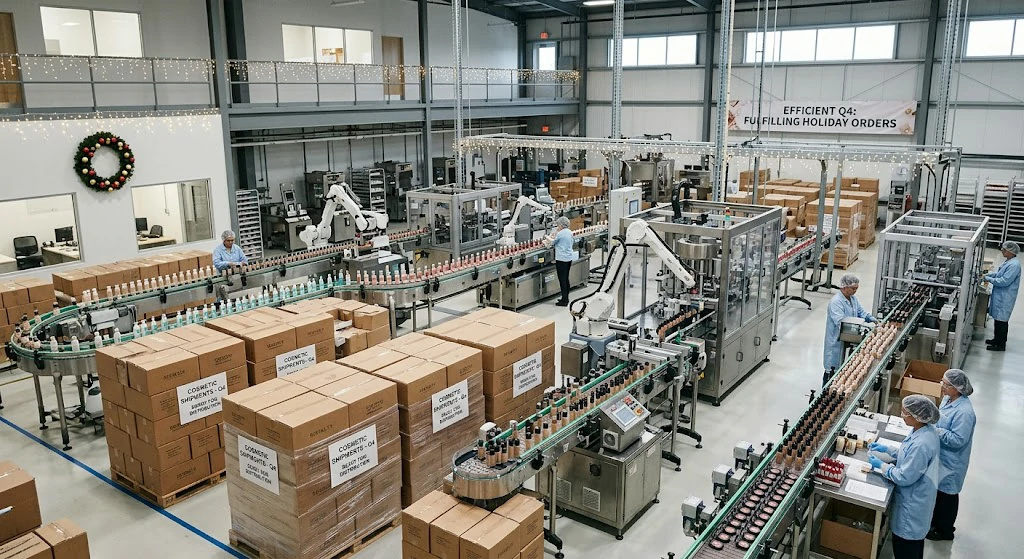
When developing a liquid blush line with a contract manufacturer, professional buyers must address specific technical requirements to ensure product success.
Viscosity and Packaging Compatibility
The most common failure point for liquid blushes is leakage. The viscosity of the bulk formula must match the applicator type.
Doe-Foot Applicators: Require a medium-to-high viscosity to prevent dripping when the wand is removed.
Airless Pumps: Ideal for thinner, serum-like textures to prevent oxidation and contamination.
Squeeze Tubes: Best for thicker cream emulsions; cost-effective for indie startups.
Stability Testing Requirements
Liquid blushes contain water and oils, making them susceptible to separation and microbial growth. A reputable manufacturer must perform:
Centrifuge Testing: To ensure the emulsion does not separate under stress.
Preservative Efficacy Testing (PET): Critical for water-based formulas to prevent bacteria.
Thermal Cycling: To ensure the pigment does not settle or change color in extreme temperatures during shipping.
Pigment Dispersion
Unlike powders, pigments in liquid blushes must be perfectly ground and dispersed. Poor dispersion results in a “streaky” application. Indie brands should request “drawdown” tests during the sampling phase to verify color uniformity.
Launch Checklist for Indie Brands
To successfully launch a liquid blush line, follow this strategic roadmap:
Define the Finish: Decide between Matte (Long-wear), Satin (Natural), or Dewy (Serum). This dictates your target demographic.
Select Active Ingredients: Choose 1–2 hero ingredients (e.g., Niacinamide or Elderberry Extract) to validate the “skincare-makeup” claim.
Choose Components: Prioritize airtight packaging. Heavy-walled PETG or glass components signal luxury, while soft-touch tubes signal accessibility.
Shade Range Strategy: Launch with a minimum of 4–6 shades. Ensure inclusivity by testing pigments on Fitzpatrick skin types I through VI. A balanced range includes a cold pink, a warm coral, a deep berry, and a neutral terracotta.
FAQs for Professional Buyers
Q1: What is the typical MOQ for private label liquid blushes? A: Standard private label MOQs range from 1,000 to 3,000 units per shade. However, some manufacturers offer “white label” ready-to-sell stock options starting at 50–100 units.
Q2: Can liquid blushes be formulated as “Clean Beauty”? A: Yes. Liquid blushes can easily exclude parabens, cyclic silicones, and synthetic fragrances. Manufacturers can substitute synthetic emulsifiers with plant-based alternatives to meet Sephora or Credo “Clean” standards.
Q3: What is the shelf life of a liquid blush? A: Unopened, the shelf life is typically 24–36 months. Once opened (PAO), it is usually 12 months. Water-based formulas have a shorter PAO than anhydrous (oil-based) ones due to microbial risks.
Q4: How does the cost of goods (COGS) compare to powder blush? A: The bulk cost of liquid blush is often slightly higher than powder due to ingredients like oils and actives. However, the filling and assembly process is often cheaper (no pressing required), making the total unit cost competitive.
Q5: Is it possible to color-match a competitor’s liquid blush? A: Yes. Contract manufacturers can perform reverse engineering (deformulation) to match a benchmark shade and texture. This usually requires a higher MOQ (typically 3,000+ units) and R&D fees.
Recent Post