Samples ship in 3 business days · UPS DDP, duties included3,800+ sample orders shipped to 59 countriesPrivate label from 11 pcs per SKU (makeup) · 12 pcs (skincare)GMPC · ISO 22716 · Made to FDA & EU rules
Advanced Lip Formulations for Winter/Fall: Navigating Efficacy, Aesthetics, and Compliance
DOCUMENT OUTLINE
- Key Takeaways for Winter/Fall Lip Formulations
- The Unique Challenges of Seasonal Lip Care
- Core Ingredient Technologies for Optimal Lip Health & Aesthetics
- Decoding Winter/Fall Color Trends and Finish Innovations
- Essential Regulatory Frameworks and Testing Protocols
- The Future of Seasonal Lip Products: Sustainability and Multifunctionality
- Critical Compliance & Safety Testing for Lip Products
The transition into winter and fall presents a distinct set of challenges and opportunities for the lip makeup sector. Consumers demand products that not only deliver rich, on-trend aesthetics but also provide robust protection and comfort against harsh environmental conditions. As an industry, the imperative is to formulate lip products that transcend mere cosmetic appeal, offering advanced dermatological benefits while adhering to stringent global regulatory standards. This article delves into the scientific and market intricacies of developing high-performance lip formulations tailored for the colder seasons.
The Unique Challenges of Seasonal Lip Care
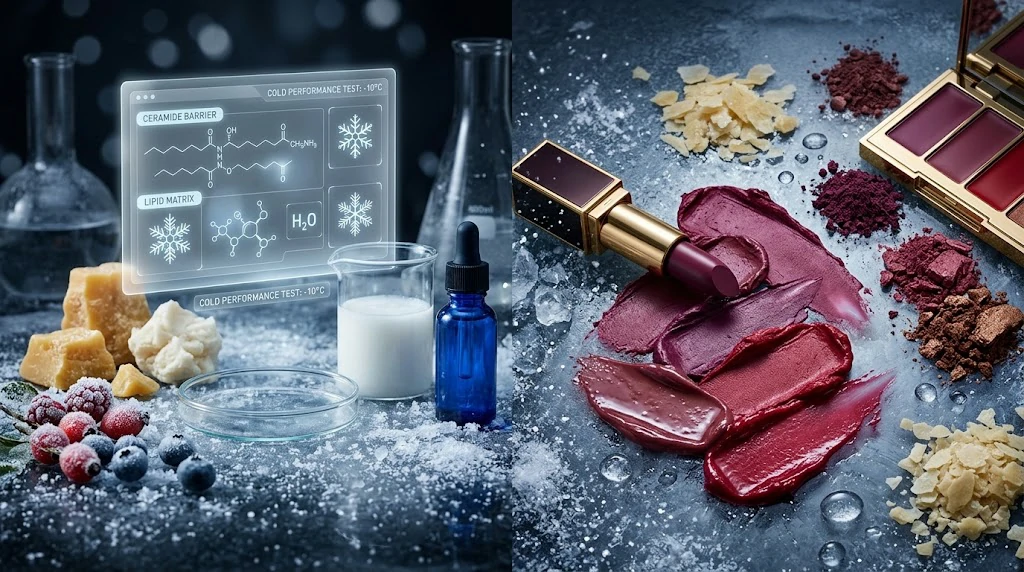
During winter and fall, lips are particularly vulnerable to environmental aggressors. Reduced humidity, cold temperatures, and increased wind exposure contribute to accelerated transepidermal water loss (TEWL), leading to dryness, chapping, flaking, and discomfort. The delicate stratum corneum of the lips, lacking sebaceous glands, is less equipped to maintain its barrier function compared to other skin areas. Consequently, lip products for these seasons must address:
- Enhanced Barrier Protection: To minimize moisture loss and shield against external irritants.
- Intense Hydration: To replenish moisture and improve lip suppleness.
- Soothing & Repair: To alleviate existing irritation and promote healing of chapped skin.
- Comfortable Wear: Formulations must feel pleasant, non-sticky, and non-drying, especially for long-wear or matte finishes.
- Pigment Stability: Maintaining vibrant, consistent color payoff despite complex emollient systems.
Core Ingredient Technologies for Optimal Lip Health & Aesthetics
Achieving superior performance in winter/fall lip products necessitates a sophisticated blend of active and functional ingredients:
Emollients & Occlusives: The Foundation of Barrier Support
These ingredients form a protective film on the lip surface, preventing water evaporation and imparting a smooth feel. Key examples include:
- Plant Butters: Shea butter (Butyrospermum Parkii Butter), Cocoa butter (Theobroma Cacao Seed Butter), and Mango butter (Mangifera Indica Seed Butter) offer rich textures and emollient properties.
- Waxes: Candelilla wax (Euphorbia Cerifera Cera), Carnauba wax (Copernicia Cerifera Cera), and Beeswax (Cera Alba) provide structure, film-forming capabilities, and occlusivity.
- Plant Oils: Jojoba oil (Simmondsia Chinensis Seed Oil), Argan oil (Argania Spinosa Kernel Oil), and Sunflower seed oil (Helianthus Annuus Seed Oil) deliver essential fatty acids and antioxidants.
- Squalane: A highly stable emollient that mimics natural skin lipids, offering excellent moisturization without a greasy feel.
- Silicones: Dimethicone and Cyclopentasiloxane enhance spreadability, provide a silky feel, and contribute to long-wear properties and barrier function.
Humectants: Drawing and Retaining Moisture
Humectants attract and bind water, drawing it from the environment or deeper skin layers to hydrate the lip surface.
- Hyaluronic Acid (Sodium Hyaluronate): Available in various molecular weights, it can provide surface hydration and deeper moisture penetration.
- Glycerin: A highly effective and widely used humectant.
- Propanediol & Butylene Glycol: Solvents with humectant properties, aiding in ingredient dispersion and feel.
- Sodium PCA: A natural moisturizing factor (NMF) component, highly effective in retaining moisture.
Film-Forming Polymers: Enhancing Longevity and Comfort
These polymers create a flexible, non-tacky film that improves wear time, prevents feathering, and enhances transfer resistance.
- Acrylates Copolymers: Offer excellent film-forming and water-resistance.
- PVP/Hexadecene Copolymer: Provides water-repellency and long-lasting wear.
- Trimethylsiloxysilicate: A silicone resin that forms a durable, flexible film.
Soothing & Repairing Agents: Alleviating Discomfort
Ingredients that calm irritation and support the skin’s natural repair processes are crucial for chapped lips.
- Bisabolol: Derived from chamomile, known for its anti-inflammatory and soothing properties.
- Allantoin: Promotes cell proliferation and wound healing, reducing irritation.
- Panthenol (Pro-Vitamin B5): A humectant with soothing and barrier-repairing benefits.
- Vitamin E (Tocopherol): An antioxidant that protects against environmental damage and supports skin healing.
Decoding Winter/Fall Color Trends and Finish Innovations
Beyond functional performance, seasonal aesthetics play a pivotal role. Winter and fall typically usher in a palette of deeper, richer hues and diverse finishes:
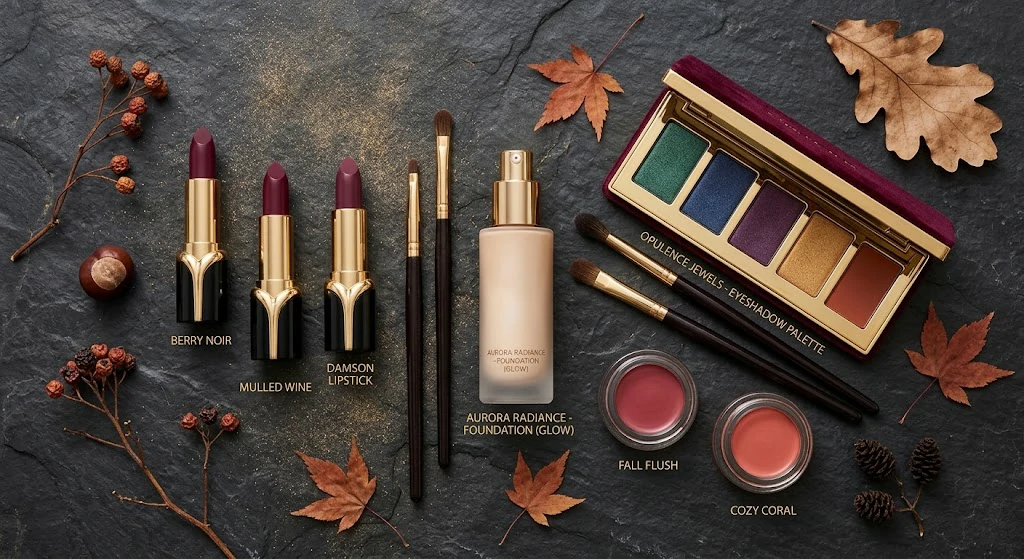
- Color Palette: Deep berry tones (burgundy, wine), plums, rich browns, terracotta, and sophisticated muted nudes dominate. These shades require robust pigment loading and excellent dispersion to ensure true-to-pan color payoff on the lips.
- Finishes: While matte finishes remain popular, there’s an increasing demand for ‘comfort matte’ or ‘velvet matte’ formulations that offer a soft, non-drying feel. Satin and high-shine glosses also see a resurgence, often infused with subtle shimmer or metallic effects for added dimension.
- Multi-functional Products: The market increasingly favors hybrid products that combine color with treatment benefits, such as tinted lip balms with SPF, plumping effects, or intensive overnight repair masks.
Essential Regulatory Frameworks and Testing Protocols
Global market access for lip products hinges on strict adherence to regional regulatory frameworks and comprehensive safety and efficacy testing. Key considerations include:
- Ingredient Compliance: Adherence to positive and negative lists for colorants, preservatives, UV filters, and other restricted substances (e.g., EU Cosmetics Regulation 1223/2009 Annexes, FDA Color Additive Regulations).
- Heavy Metal Limits: Stringent limits for heavy metals like lead, arsenic, cadmium, and mercury are critical, with varying thresholds across regions.
- Good Manufacturing Practices (GMP): Compliance with standards like ISO 22716 ensures product quality and safety throughout the manufacturing process.
- Labeling Requirements: Accurate INCI (International Nomenclature of Cosmetic Ingredients) listing, allergen declarations, and appropriate warnings are mandatory.
Critical Compliance & Safety Testing for Lip Products
| Testing Parameter | FDA Protocol | EU CPNP Protocol |
|---|---|---|
| Heavy Metal Analysis | USP <232>, <233> (e.g., Pb, As, Cd, Hg limits) | Regulation (EC) No 1223/2009 Annexes II, III (stricter limits for Pb, As, Cd, Hg, and other impurities) |
| Microbiological Purity | USP <61>, <62> (Total Aerobic Microbial Count, Absence of specific pathogens like S. aureus, P. aeruginosa, C. albicans) | ISO 17516 (Microbiological limits for cosmetic products, including absence of specific pathogens) |
| Stability Testing | ICH Q1A (R2) (Accelerated, Long-term, Intermediate studies to assess physical, chemical, and microbiological stability) | Guideline on stability testing of cosmetic products (COLIPA/Cosmetics Europe) (Similar accelerated and real-time studies) |
| Preservative Efficacy (PET) | USP <51> (Antimicrobial Effectiveness Testing, challenging product with specific microorganisms) | ISO 11930 (Evaluation of the antimicrobial protection of a cosmetic product, similar challenge test) |
| Irritation/Sensitization | HRIPT (Human Repeat Insult Patch Test) for sensitization potential, in vitro methods for irritation | In vitro methods (e.g., EpiSkin, EpiDerm) for skin irritation, HRIPT for sensitization (if applicable and ethically approved) |
| Hydration Efficacy | Corneometer measurements, TEWL assessment, clinical grading (in vivo studies) | Corneometer measurements, TEWL assessment, clinical grading (in vivo studies) |
| Wear Performance | In-use consumer studies, instrumental colorimetry post-application/wear, transfer resistance tests | In-use consumer studies, instrumental colorimetry post-application/wear, transfer resistance tests |
The Future of Seasonal Lip Products: Sustainability and Multifunctionality
The trajectory for winter/fall lip products points towards greater integration of sustainable sourcing, ‘clean beauty’ principles, and advanced multi-functional benefits. Brands are increasingly seeking ethically sourced, biodegradable ingredients and eco-friendly packaging solutions. Furthermore, the demand for personalized lip care, incorporating custom colors or targeted treatment benefits, is on the rise. Success in this dynamic category will continue to be defined by a brand’s ability to fuse cutting-edge cosmetic chemistry with consumer-centric innovation and unwavering regulatory compliance.
Audit Aurora Global Brands Facility
Recent Post