The Science of Sophistication: A Deep Dive into Face Powder Formulation and Market Dynamics
INDEX & KEY INSIGHTS
- Understanding Face Powder: Evolution and Market Significance
- Categorization and Functional Diversity of Face Powders
- Core Ingredients: The Chemical Foundation of Performance
- Advanced Formulation Challenges and Innovative Solutions
- The Manufacturing Journey: From Raw Material to Finished Product
- Market Trends: Driving the Future of Face Powder Innovation
Face powder, a cornerstone of cosmetic artistry, has evolved from simple talc-based formulations to sophisticated blends of advanced polymers, minerals, and active skincare ingredients. This article explores the intricate chemistry, diverse types, manufacturing complexities, and prevailing market trends shaping the modern face powder landscape for B2B stakeholders.
Understanding Face Powder: Evolution and Market Significance
The history of face powder traces back to ancient civilizations, where finely ground minerals and starches were used for aesthetic and protective purposes. Today, face powder serves multiple critical functions in makeup application: absorbing excess oil, setting liquid or cream products for extended wear, blurring imperfections, evening skin tone, and in some cases, providing sun protection. The global face powder market continues to demonstrate robust growth, driven by consumer demand for natural-looking finishes, long-wear performance, skincare-infused benefits, and an ever-expanding range of inclusive shades.
Categorization and Functional Diversity of Face Powders
The face powder category encompasses a wide array of product types, each designed for specific applications and consumer preferences:
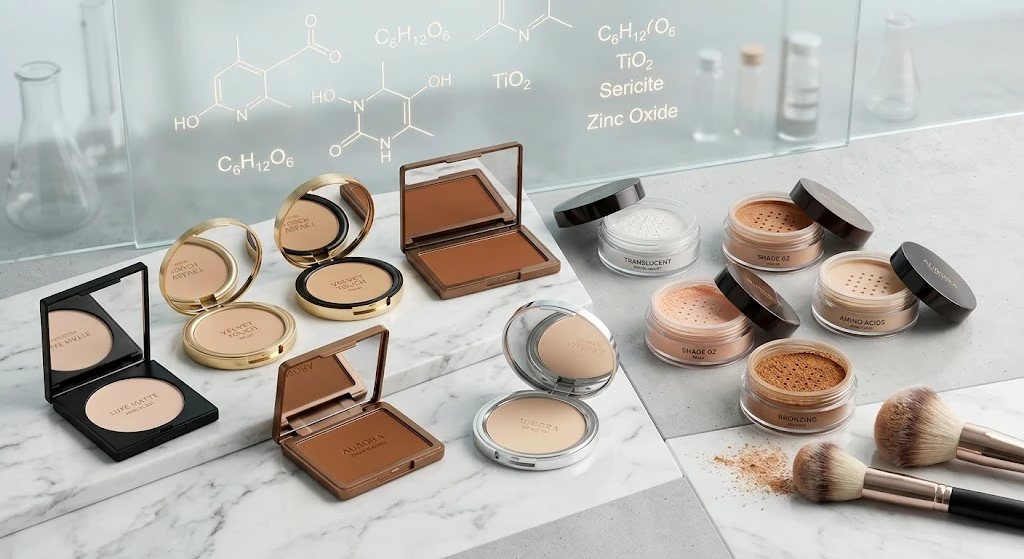
- Loose Powder: Characterized by its fine, airy texture, loose powder provides a natural, diffused finish. It is primarily used for setting makeup, controlling shine, and offering light coverage.
- Pressed Powder: Formulated with binders to create a solid, compact form, pressed powder offers portability and convenience for touch-ups throughout the day. It typically provides buildable coverage and a more matte finish.
- Setting Powder: Specifically designed to lock makeup in place and extend its wear, setting powders are often translucent or very lightly tinted to avoid altering foundation color.
- Finishing Powder: Applied after setting powder, finishing powders are formulated to blur imperfections, diffuse light, and create a ‘soft focus’ effect, often containing light-reflecting particles.
- Mineral Powder: Composed primarily of naturally derived minerals like mica, titanium dioxide, and zinc oxide, these powders are often favored for sensitive skin due to their non-comedogenic and anti-inflammatory properties. They typically offer buildable coverage and a natural finish.
- HD (High-Definition) Powder: Often silica-based, these powders are engineered to create a flawless, poreless appearance under high-definition cameras, though some formulations can cause ‘flashback’ in photography.
- Baked Powder: Created by baking a liquid or cream formula until it solidifies, baked powders offer a unique, often marbled texture. They can be used wet for more intense color or dry for a sheerer application.
- Translucent vs. Tinted: Translucent powders provide no color, focusing solely on setting and oil control. Tinted powders offer additional coverage and can help to even out skin tone or correct minor discolorations.
Core Ingredients: The Chemical Foundation of Performance
The efficacy and sensory experience of face powders are dictated by a sophisticated blend of raw materials:
- Absorbents: Ingredients like Talc (magnesium silicate), Silica, Kaolin, Corn Starch, and Rice Starch are crucial for oil absorption and creating a matte finish. Particle size and porosity significantly impact performance.
- Binders: Essential for the structural integrity of pressed powders, common binders include Magnesium Stearate, Zinc Stearate, Isopropyl Myristate, and various silicones (e.g., Dimethicone). They ensure the powder adheres to itself and to the skin.
- Emollients & Skin Conditioners: Ingredients such as Dimethicone, Cyclopentasiloxane, and various esters (e.g., Isopropyl Palmitate) enhance the powder’s slip, spreadability, and non-drying feel, preventing a ‘cakey’ appearance.
- Pigments: Iron Oxides (red, yellow, black), Titanium Dioxide, and Ultramarines provide color, coverage, and contribute to SPF properties. Precise blending is critical for shade matching.
- Fillers & Texturizers: Mica imparts luminosity and slip, Bismuth Oxychloride offers shimmer (though can be irritating for some), and Boron Nitride provides a soft-focus effect and enhanced slip.
- Specialty Actives: Modern formulations often incorporate skincare benefits through ingredients like Hyaluronic Acid for hydration, Vitamin E for antioxidant properties, Niacinamide for skin barrier support, Salicylic Acid for blemish control, and broad-spectrum SPF agents (Zinc Oxide, Titanium Dioxide).
- Preservatives: To ensure product stability and safety, preservatives such as Phenoxyethanol and Caprylyl Glycol are utilized, with a trend away from parabens in many markets.
Advanced Formulation Challenges and Innovative Solutions
Developing high-performance face powders presents several formulation challenges:
- Texture and Sensory Experience: Achieving a silky, non-cakey, and ‘blurring’ feel requires careful selection of particle sizes, surface-treated powders, and emollients to optimize slip and adhesion.
- Adhesion and Longevity: Formulators utilize film-forming polymers and silicone elastomers to enhance the powder’s adherence to the skin, ensuring long-lasting wear and resistance to transfer.
- Oil Control vs. Hydration: Balancing the oil-absorbing properties of certain ingredients with humectants and emollients is crucial to prevent excessive dryness, particularly for consumers with dry or mature skin.
- Shade Inclusivity: Developing comprehensive shade ranges that cater to diverse skin tones and undertones requires sophisticated pigment blending and rigorous testing.
- ‘Clean Beauty’ and Sustainability: The industry is increasingly focused on sourcing natural alternatives, biodegradable ingredients, and developing refillable or recyclable packaging solutions to meet consumer demand for ethical and environmentally conscious products.
- Hybrid Formulations: The integration of skincare benefits, such as serum or primer properties, into powder formulations blurs the lines between makeup and treatment, offering multi-functional products.
The Manufacturing Journey: From Raw Material to Finished Product
The production of face powder involves several critical stages, each demanding precision and quality control:
- Raw Material Sourcing and Quality Control: Strict vetting of suppliers ensures the purity, consistent particle size, and microbial safety of all incoming ingredients.
- Milling and Micronization: Raw materials undergo milling and micronization to achieve the desired particle size distribution, which directly impacts the powder’s texture, blendability, and finish.
- Blending: Dry ingredients are meticulously blended to ensure homogeneity, followed by the careful incorporation of liquid binders, emollients, and pigments to create a uniform mixture.
- Pressing (for pressed powders): This critical step involves compacting the powder mixture into pans using precise pressure and dwell times. The tooling and pressing parameters are vital for achieving the desired hardness, friability, and consumer feel.
- Sifting and Filling (for loose powders): Loose powders are sieved to ensure a consistent, lump-free product before being filled into appropriate containers.
- Quality Control: Throughout the process, rigorous quality checks are performed, including shade matching, texture analysis, hardness and friability testing, microbial testing, and stability assessments to ensure product integrity and performance.
- Packaging: The final stage involves packaging the finished product, with increasing attention paid to sustainable materials and innovative designs, such as refillable compacts.
Market Trends: Driving the Future of Face Powder Innovation
The face powder market is dynamic, influenced by several key trends:
- Skincare-Infused Powders: The demand for products that offer both cosmetic enhancement and skin benefits continues to grow, leading to powders enriched with active ingredients like ceramides, peptides, and antioxidants.
- Customization and Personalization: Advances in AI and digital tools are enabling more personalized shade matching and the potential for bespoke powder formulations tailored to individual skin needs.
- Sustainable and Ethical Sourcing: Consumers are increasingly prioritizing brands that demonstrate transparency in their supply chains, utilizing fair trade, cruelty-free, vegan, and eco-friendly ingredients and packaging.
- Performance-Driven Formulations: There is a strong market pull for long-wear, transfer-proof, waterproof, and even blue-light protective powders that meet the demands of modern lifestyles.
- Minimalist and ‘No-Makeup Makeup’ Aesthetic: A preference for lightweight, breathable, and natural-looking finishes continues to drive innovation in sheer and blurring powder formulations.
- Digital Integration: Virtual try-on technologies and online educational content are becoming integral to the consumer journey, influencing product discovery and purchase decisions.
The face powder category continues its dynamic evolution, driven by advancements in cosmetic chemistry, shifting consumer demands for performance and ethical sourcing, and a growing emphasis on hybrid formulations. For brands, understanding these intricate details and leveraging innovative manufacturing capabilities is paramount to success in a competitive market.
Manufacture with Aurora Global Brands
Recent Post